Photo: Ksenia Chernaya, Pexels
Can you sharpen your eyesight before your next drive? Often you can see better behind the wheel, but rarely in the way “vision training” adverts promise. Most real gains come from the right correction, treating a problem that is blurring your sight, and keeping everything between your eyes and the road clean.
This is general information, not medical advice. If your vision has changed, see an optometrist or doctor.
What works, what helps and what does not
| Approach | Verdict | Why |
|---|---|---|
| Up-to-date glasses or contact lenses | Works | The American Academy of Ophthalmology (AAO) says glasses or contacts are a must if you want your best vision. |
| Cataract surgery, when advised | Works | The NHS says the operation should help most people’s sight. |
| Treating dry eye | Helps | Dry eyes can make vision blurry; drops, gels and ointments are available from pharmacies. |
| Managing diabetes | Helps protect sight | The National Eye Institute (NEI) calls it the best way to lower your risk of diabetic retinopathy. |
| Laser or lens surgery | An option for some | Can correct short sight, long sight and astigmatism, but carries risks. |
| Yellow “night driving glasses” | Does not work | No proven benefit, and tints cut the light reaching your eyes. |
| Eye exercises and training programmes | Does not work | No evidence they reduce or remove the need for glasses. |
Start with the right prescription
Short sight, long sight and astigmatism are focusing problems with the shape of the eye. They are fixed by lenses, not effort. The NHS recommends an eye test every two years, or more often if your optometrist advises it. A sight test is also a health check: it can pick up conditions such as glaucoma, macular degeneration and cataracts.
If you need glasses or contact lenses to meet the driving standard, you must wear them every time you drive. The College of Optometrists also suggests keeping a spare pair in the glove compartment and making sure your driving glasses are free of dirt and scratches.
Conditions that can be treated
Cataracts
The NHS lists glare sensitivity, halos around lights and difficulty seeing at night among cataract symptoms. Cataract surgery should help most people’s sight, recovery is usually quick and serious complications are uncommon. You may still be able to drive with cataracts if your vision is good enough, but you must tell the DVLA if your eyesight no longer meets the standard.
Dry eye
Dry eyes can feel gritty and make your vision blurry. The NHS advises asking a pharmacist about eye drops, gels or ointments, taking regular breaks from screens, and not smoking or drinking too much alcohol.
Diabetic retinopathy
The NEI says managing your diabetes is the best way to lower your risk, and that high blood pressure or high cholesterol alongside diabetes raises it. It recommends a comprehensive dilated eye examination at least once a year for people with diabetes, and more often for some people who already have retinopathy.
Laser and lens surgery: an option, not a shortcut
Laser eye surgery and lens surgery can correct short sight, long sight and astigmatism. The NHS notes they are usually only available privately. Glare, halos and dry, sore eyes are common afterwards and usually improve within a few months, and sometimes a second operation is needed. The legal standard does not change: you still have to meet it every time you drive. Our UK driving eyesight guide explains the rules, and the US page covers American requirements.
Night driving: what actually helps
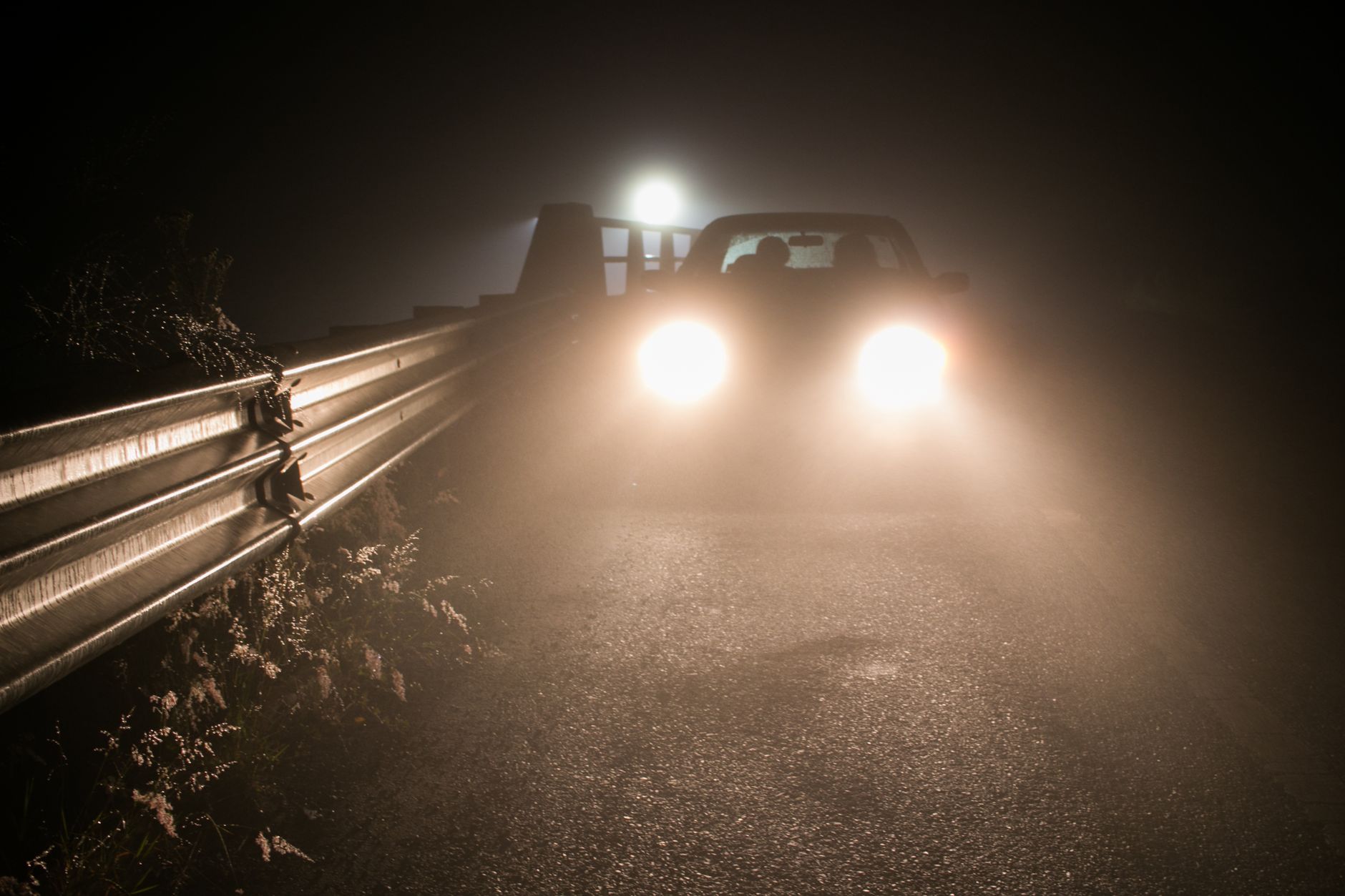
Yellow-tinted “night driving glasses” are widely sold, but a simulator study reported by the AAO found no benefit over clear lenses in spotting pedestrians. An AAO ophthalmologist warns that anything reducing the light reaching your eyes at night makes it harder to see. The College of Optometrists advises avoiding yellow filters and says the tint may make dark parts of the road harder to see.
Better steps cost little:
- Clean the windscreen inside and out; the inside smudges easily.
- Replace worn wiper blades and wipe road grime off your headlights.
- Keep your glasses clean and your prescription current.
- See an optometrist or doctor if your night vision seems to be getting worse, as some causes are treatable.
Screens, eye strain and the 20-20-20 rule
Long spells at a screen can leave your eyes tired, dry or briefly blurry. The AAO suggests the 20-20-20 rule: every 20 minutes, look at something at least 20 feet (about 6 metres) away for at least 20 seconds. Eye strain is uncomfortable but, according to the AAO, does not cause permanent damage. Breaks help comfort; they do not change your prescription.
Protecting your eyes for the long haul
- Do not smoke. The NEI says smoking raises the risk of macular degeneration and cataracts and can damage the optic nerve.
- Wear proper sunglasses. Choose a pair that blocks 99 to 100 per cent of UVA and UVB, even on cloudy days.
- Eat well. The NEI recommends dark leafy greens such as spinach and kale, and fish high in omega-3 fatty acids.
- Be careful with supplements. In NEI trials, AREDS supplements lowered the risk of intermediate age-related macular degeneration (AMD) becoming advanced by about 25 per cent. The NEI is clear that these supplements do not prevent AMD starting and have no effect on cataracts, so they are for specific AMD patients on professional advice.
Myth: you can train your eyes out of glasses
The AAO says short sight, long sight and astigmatism cannot be corrected with eye exercises, and that there is no scientific evidence any eye exercise programme will reduce or remove the need for glasses. The one recognised exception is convergence insufficiency, where the eyes struggle to work together up close; an eye specialist may prescribe exercises for that.
The same applies to our own tools. The number plate practice test and our vision games are fun ways to practise attention and quick recognition. They are not a treatment and not a sight test. Only an optometrist can tell you whether you meet the standard.
The bottom line
You cannot exercise away a prescription, but you can see the road better. Keep your glasses or contacts up to date, get eye tests regularly, treat problems such as cataracts or dry eye, keep glass surfaces clean, and skip tinted night lenses.
Sources
- Driving eyesight rules (gov.uk)
- Can I improve eye vision naturally through exercises so I don’t need to wear eyeglasses or contact lenses? (aao.org)
- Vision Training Not Proven to Make Vision Sharper (aao.org)
- Driving at Night: Do Yellow-Tinted Lenses Improve Vision? (aao.org)
- Night Driving Glasses May Hurt, Not Help (aao.org)
- Eye Strain: How to Prevent Eye Discomfort (aao.org)
- Public urged to wear their glasses for night driving (college-optometrists.org)
- Cataracts in adults (nhs.uk)
- Dry eyes (nhs.uk)
- Laser eye surgery and lens surgery (nhs.uk)
- Visiting an optician (nhs.uk)
- Diabetic Retinopathy (nei.nih.gov)
- Keep Your Eyes Healthy (nei.nih.gov)
- About AREDS and AREDS2 (nei.nih.gov)